
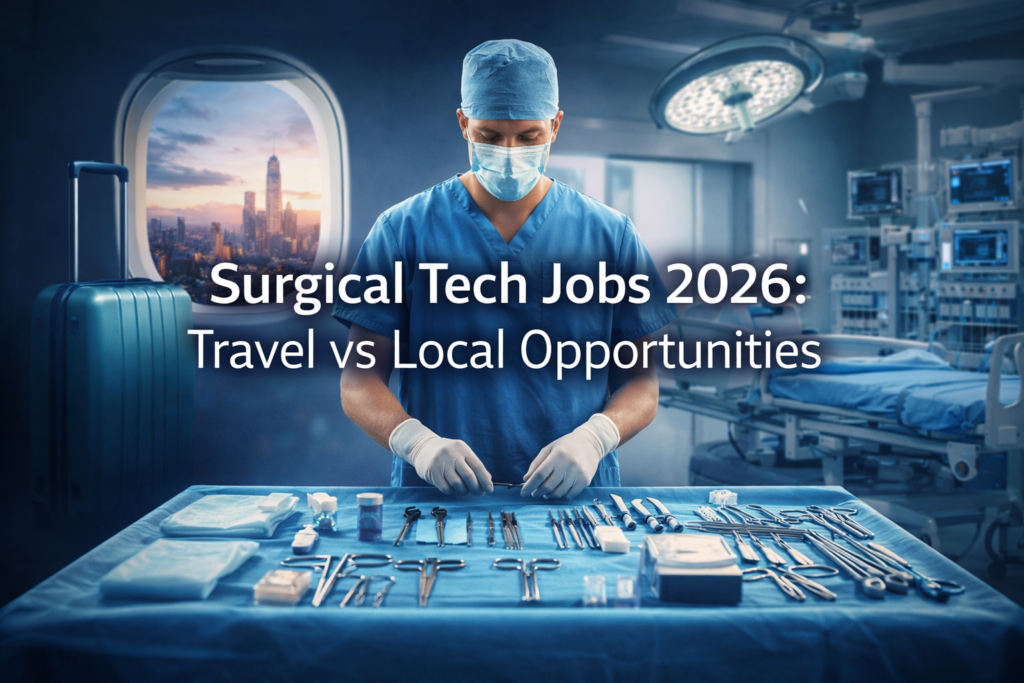
Understanding Surgical Tech Jobs in 2026
The world of surgical tech jobs in 2026 looks more dynamic than ever. Healthcare systems are expanding, surgical procedures are becoming increasingly advanced, and hospitals are facing ongoing staffing shortages. All of this has pushed surgical technologist jobs into the spotlight, making them one of the most reliable and in-demand healthcare careers today. If you’ve been considering stepping into the operating room, this is a moment full of opportunity.
A surgical technologist, often called an operating room tech, plays a crucial behind-the-scenes role that directly impacts patient outcomes. Think of them as the backbone of the surgical team. They prepare the operating room, ensure all instruments are sterile, and assist surgeons during procedures. Without them, even the most skilled surgeon would struggle to maintain efficiency and safety. This isn’t just a job it’s a precision-driven profession where every detail matters.
In 2026, the demand for these professionals is fueled by several factors. An aging population means more surgeries, while advancements in minimally invasive procedures powered by modern AI-driven healthcare systems require highly trained support staff. According to industry projections, surgical technologist employment is expected to grow steadily, with some regions experiencing shortages that create lucrative opportunities. That’s where the choice between travel surgical tech contracts and local positions becomes especially important.
What makes this career even more appealing is its flexibility. You can choose stability with a local hospital role or embrace adventure with travel assignments across the country. Each path offers unique advantages, from salary variations to lifestyle differences. The real question isn’t whether there are jobs available it’s which type of surgical tech career fits your life best.
What Does a Surgical Technologist Do?
If you’ve ever wondered what happens behind those closed operating room doors, this is where the surgical technologist steps in. Their role is far more complex than just handing instruments to a surgeon. They are responsible for maintaining a sterile environment, which is absolutely critical to preventing infections and ensuring patient safety. Even the smallest mistake in sterile field maintenance can have serious consequences.
Before surgery begins, surgical techs prepare the operating room by sterilizing equipment, arranging surgical tools, and ensuring everything is in perfect order. This process requires meticulous attention to detail. Imagine setting up a high-stakes chessboard where every piece must be placed exactly right except lives are on the line. During surgery, they anticipate the surgeon’s needs, passing instruments quickly and efficiently while keeping track of all tools used.
Their responsibilities don’t end when the procedure is over. Surgical techs also assist with post-operative tasks, including cleaning instruments and preparing the room for the next surgery. In busy hospitals, this cycle repeats multiple times a day, demanding both physical stamina and mental focus.
Beyond technical skills, communication is key. Surgical technologists must work seamlessly with surgeons, nurses, and anesthesiologists. It’s a team environment where timing and coordination are everything. You’re not just supporting the procedure—you’re actively contributing to its success.
In 2026, the role has expanded even further with technology integration. Surgical techs are now expected to handle advanced equipment, including robotic surgical systems. This evolution means the job is not only stable but also continuously evolving, making it an exciting career for those who thrive in fast-paced environments.
The Role of a Certified Surgical Technologist (CST)
Becoming a Certified Surgical Technologist (CST) is often the key that unlocks higher-paying and more competitive surgical tech jobs. While some entry-level positions may not require certification, most employers in 2026 strongly prefer or even mandate it. Certification signals that you meet industry standards and are fully prepared to handle the demands of the operating room.
The certification process is overseen by the NBSTSA (National Board of Surgical Technology and Surgical Assisting). To earn your CST credential, you must complete an accredited surgical technology program and pass a comprehensive exam. This exam tests your knowledge of everything from instrumentation handling to perioperative care, ensuring you’re ready for real-world scenarios.
Why does this matter so much? Because hospitals are prioritizing patient safety and quality outcomes more than ever. A CST credential reassures employers that you understand sterile techniques, surgical procedures, and emergency protocols. In competitive job markets, this certification can be the deciding factor between candidates.
There’s also a financial incentive. Certified surgical techs often earn higher salaries compared to non-certified counterparts. Employers are willing to pay more for professionals who bring proven expertise to the table. This becomes even more significant when considering travel surgical tech contracts, where certification is almost always required.
Maintaining your CST certification requires ongoing education. You’ll need continuing education credits to stay current with evolving surgical practices. While this might sound like extra work, it actually keeps your skills sharp and opens doors to specialized roles in high-demand areas like cardiac or orthopedic surgery.
In many ways, becoming a CST transforms your career from a job into a profession. It’s a commitment to excellence, continuous learning, and delivering the highest standard of patient care. And in a field where precision can mean the difference between life and death, that commitment is invaluable.
How to Become a Surgical Tech
Breaking into surgical tech jobs in 2026 is more accessible than many people think, but it still requires dedication, structured training, and a willingness to work in high-pressure environments. If you’re picturing years of medical school, you can relax—that’s not the path here. Instead, becoming a surgical technologist typically involves completing a focused education program that gets you job-ready in a relatively short time frame.
Most aspiring surgical techs start with either a diploma, certificate, or associate degree in surgical technology. These programs are offered by community colleges, technical schools, and some universities. They usually take anywhere from 9 months to 2 years to complete, depending on the level of education you pursue. The curriculum is hands-on and highly practical, covering topics like sterile field maintenance, anatomy, microbiology, and instrumentation handling. You’re not just memorizing—you’re learning how to function in a real operating room.
Clinical experience is where things get real. During your training, you’ll participate in supervised surgical procedures, gaining firsthand exposure to the operating room environment. This is where many students realize whether they truly enjoy the fast-paced, detail-oriented nature of the job. It’s intense, but also incredibly rewarding.
After completing your education, the next step is certification, which significantly boosts your employability. While some states or employers may allow you to work without certification, most hospitals prefer candidates who have passed the CST exam. This is especially true if you’re aiming for higher-paying roles or considering travel surgical tech contracts.
The beauty of this career path lies in its efficiency. In less than two years, you can transition into a stable healthcare career with strong earning potential and job security. Compared to many other medical professions, that’s a pretty compelling return on investment.
Education Requirements and Training Programs
When it comes to qualifying for surgical technologist jobs, choosing the right education program can make a significant difference in your career trajectory. Not all programs are created equal, and in 2026, employers are increasingly favoring candidates who graduate from accredited institutions. Accreditation ensures that your training meets industry standards and prepares you for certification exams like the CST.
Most programs include a blend of classroom instruction and clinical practice. In the classroom, you’ll dive into subjects like surgical procedures, patient care, and infection control. You’ll also learn about different types of surgeries, from general procedures to specialized fields like orthopedics and cardiac surgery. This knowledge becomes your foundation, helping you understand what’s happening during each operation.
The clinical component is where theory meets practice. Students are placed in hospitals or surgical centers, working alongside experienced professionals. This hands-on training is essential because it builds confidence and competence. You’ll learn how to set up an operating room, manage surgical instruments, and assist during procedures all under real-world conditions.
Here’s a quick comparison of common education paths:
| Program Type | Duration | Outcome |
|---|---|---|
| Certificate/Diploma | 9–12 months | Entry-level readiness |
| Associate Degree | 18–24 months | Broader knowledge + better job prospects |
Employers often prefer associate degree holders because of their more comprehensive training, but certificate programs can still open doors, especially in high-demand areas. Ultimately, your choice depends on your timeline, budget, and long-term career goals.
In 2026, online hybrid programs are also gaining popularity, especially with AI-powered education platforms. These allow you to complete theoretical coursework online while attending in-person clinical sessions. It’s a flexible option for those balancing work or family commitments.
CST Certification and NBSTSA Requirements
If there’s one credential that truly defines professionalism in this field, it’s the CST certification. Offered by the NBSTSA, this certification has become the gold standard for surgical tech jobs across the United States. While it’s not always legally required, skipping it can limit your opportunities significantly.
To qualify for the CST exam, you must graduate from an accredited surgical technology program. Once eligible, you’ll take a comprehensive exam that evaluates your knowledge of surgical procedures, perioperative care, and safety protocols. The exam is rigorous, but it’s designed to ensure that only competent, well-trained individuals enter the operating room.
Why does certification matter so much? Because it builds trust. Hospitals and surgical centers want professionals who can perform under pressure without compromising patient safety. A CST credential signals that you’ve met national standards and are ready to handle the responsibilities of the job.
There’s also a financial upside. Certified surgical techs often earn higher wages and have access to more job opportunities, including travel assignments. Many travel surgical tech contracts specifically require CST certification, making it essential if you’re considering that career path.
Maintaining your certification isn’t a one-and-done process. You’ll need to earn continuing education credits and renew your certification periodically. This ensures that you stay updated on the latest surgical techniques and technologies, which is crucial in a field that evolves rapidly.
Think of CST certification as your professional passport. It not only validates your skills but also opens doors to advanced roles, specialized fields, and higher earning potential. Without it, you’re limiting your reach in an otherwise opportunity-rich career.
Surgical Tech Salary in 2026
Let’s talk numbers, because salary is often one of the biggest deciding factors when exploring surgical tech jobs. In 2026, the earning potential for surgical technologists remains strong, with steady growth driven by demand and specialization. Whether you choose a local role or venture into travel assignments, your income can vary significantly based on several factors.
On average, surgical tech salary ranges between $55,000 and $85,000 annually in the United States. Entry-level positions tend to start on the lower end, while experienced professionals—especially those with CST certification—can earn well above the average. Travel surgical techs often command even higher pay, sometimes exceeding $100,000 per year when factoring in bonuses and stipends.
Location plays a major role in salary differences. Urban hospitals and states with higher costs of living typically offer higher wages. For example, surgical techs in California, New York, and Washington often earn more than those in rural areas. However, higher pay often comes with higher living expenses, so it’s important to consider the full picture.
Specialization is another key factor. Surgical techs working in high-demand fields like cardiac or orthopedic surgery often earn more due to the complexity of these procedures. These roles require advanced skills and experience, but they come with increased financial rewards.
Experience also matters. As you gain years in the field, your value increases. Employers are willing to pay more for professionals who can handle complex cases and train new staff. In some cases, experienced surgical techs move into supervisory or teaching roles, further boosting their income.
Ultimately, surgical tech salary in 2026 reflects a balance of skill, experience, and flexibility. Whether you prioritize stability or higher earnings, there’s a path that aligns with your financial goals.
Average Salary Breakdown by Location
Not all surgical technologist jobs pay the same, and understanding regional salary differences can help you make smarter career decisions. In 2026, geographic location remains one of the biggest influences on how much you earn as a surgical tech.
Here’s a snapshot of average annual salaries by region:
| Location | Average Salary |
|---|---|
| California | $75,000 – $95,000 |
| Texas | $55,000 – $70,000 |
| Florida | $55,000 – $68,000 |
| New York | $70,000 – $90,000 |
| Midwest (avg) | $50,000 – $65,000 |
States with higher living costs tend to offer higher salaries, but that doesn’t always mean you’ll have more disposable income. For example, earning $90,000 in California might not stretch as far as $65,000 in a more affordable state.
Travel surgical techs often bypass this limitation by working in high-paying regions while maintaining a lower-cost home base. This strategy allows them to maximize earnings without being tied to expensive living conditions.
Rural areas, on the other hand, may offer lower salaries but sometimes provide incentives like sign-on bonuses or housing assistance. These perks can make a significant difference, especially for those just starting their careers.
Understanding these variations helps you plan your career more strategically. It’s not just about how much you earn it’s about how far that income goes and how it fits into your lifestyle.
Factors That Influence Surgical Tech Pay
Salary isn’t determined by a single factor it’s shaped by a combination of elements that reflect your skills, experience, and career choices. If you’re aiming to maximize your income in surgical tech jobs, it’s important to understand what drives pay differences.
Experience is one of the most obvious factors. Entry-level surgical techs typically earn less, but salaries increase as you gain hands-on experience and develop specialized skills. Over time, you become more efficient, reliable, and capable of handling complex procedures, which makes you more valuable to employers.
Certification also plays a major role. Holding a CST certification often leads to higher pay and better job opportunities. Employers are willing to invest more in certified professionals because they bring proven expertise and reduce training costs.
Specialization is another key driver. Working in high-demand areas like cardiac or orthopedic surgery can significantly boost your earnings. These specialties require advanced knowledge and precision, which justifies higher compensation.
Employment type matters too. Travel surgical techs often earn more than local employees due to the temporary nature of their assignments and the need to fill urgent staffing gaps. Per diem roles can also offer higher hourly rates, though they may lack benefits.
Finally, negotiation skills shouldn’t be overlooked. Many surgical techs accept initial offers without negotiation, leaving money on the table. Understanding your value and advocating for yourself can lead to better compensation packages.
When you combine these factors strategically, you can shape a career that not only meets your professional goals but also maximizes your earning potential.
Travel Surgical Tech Jobs Explained
The idea of combining a healthcare career with travel sounds almost too good to be true, but travel surgical tech jobs have made that lifestyle a reality for thousands of professionals. In 2026, this path has gained serious momentum due to ongoing staffing shortages and the need for flexible, skilled workers across hospitals nationwide. If you’ve ever felt the itch to explore new places while advancing your career, this option deserves a closer look.
At its core, a travel surgical tech role involves taking short-term assignments in different healthcare facilities. These assignments, often referred to as travel surgical tech contracts, typically last between 8 to 13 weeks, though some can extend longer. During this time, you work as a fully integrated member of the surgical team, performing the same duties as permanent staff—maintaining sterile fields, handling instruments, and assisting during procedures.
What makes travel roles particularly appealing is the compensation structure. In addition to competitive base pay, travel techs often receive housing stipends, meal allowances, and travel reimbursements. This can significantly increase your overall earnings, sometimes pushing total compensation well beyond what local roles offer. It’s not uncommon for experienced travel techs to strategically choose assignments in high-paying regions to maximize income.
But it’s not just about money. Travel jobs expose you to different hospital systems, surgical techniques, and team dynamics. Each assignment becomes a learning experience, helping you grow both professionally and personally. You’re not just doing the same routine every day—you’re constantly adapting, which keeps the work engaging.
That said, this lifestyle isn’t for everyone. Frequent relocation, adjusting to new environments, and being away from family can be challenging. Still, for those who thrive on change and adventure, travel surgical tech jobs offer a unique blend of opportunity, income, and experience that’s hard to match.
What Are Travel Surgical Tech Contracts?
To truly understand the appeal of travel roles, you need to look closely at how travel surgical tech contracts work. These contracts are agreements between you, a staffing agency, and a healthcare facility in need of temporary support. Think of it as a project-based job where you step in to fill critical gaps.
Most contracts specify details like assignment length, work schedule, pay rate, and benefits. Typically, assignments last around 13 weeks, but they can be shorter or longer depending on the facility’s needs. You might work in a bustling urban hospital one month and a smaller regional clinic the next. This variety is part of what makes the role so dynamic.
One of the biggest advantages of these contracts is transparency. Before accepting an assignment, you’ll know exactly what to expect in terms of workload, compensation, and location. This allows you to plan your schedule and finances with a level of control that’s rare in traditional employment.
Staffing agencies play a major role in this process. They help match you with assignments, handle logistics like housing, and provide support throughout your contract. Some agencies even offer benefits such as health insurance, retirement plans, and bonuses for completing assignments.
Another key aspect is flexibility. After finishing a contract, you can choose to take a break, extend your current assignment, or move on to a new location. This level of autonomy is one of the biggest draws for surgical techs who don’t want to feel tied down.
In 2026, these contracts have become more competitive, especially for high-demand specialties. Facilities are willing to offer attractive packages to secure skilled professionals, making it an excellent time to explore this path if you’re looking to maximize both income and experience.
Pros and Cons of Travel Surgical Tech Jobs
Every career path has its trade-offs, and travel surgical tech jobs are no exception. While the benefits can be incredibly appealing, it’s important to weigh them against the challenges to determine if this lifestyle aligns with your priorities.
On the positive side, higher earning potential is one of the biggest advantages. Travel techs often earn more than their local counterparts due to stipends and bonuses. There’s also the opportunity to explore new cities, meet different teams, and gain diverse experience. This exposure can make you a more versatile and skilled professional, which can pay off in the long run.
Flexibility is another major perk. You have the freedom to choose assignments, take time off between contracts, and shape your schedule around your life. For many, this level of control is a game-changer.
However, there are downsides to consider. Constant relocation can be exhausting, both physically and emotionally. Building long-term relationships or maintaining a consistent routine can be difficult. There’s also the challenge of adapting quickly to new work environments, which can be stressful, especially in high-pressure operating rooms.
Here’s a quick comparison:
| Pros | Cons |
|---|---|
| Higher pay | Frequent relocation |
| Travel opportunities | Limited stability |
| Flexible schedule | Adjustment stress |
| Diverse experience | Time away from family |
Ultimately, the decision comes down to your personal preferences. If you value adventure and flexibility, travel roles can be incredibly rewarding. But if you prefer stability and routine, a local position might be a better fit.
Local Surgical Technologist Jobs
While travel roles are exciting, local surgical technologist jobs remain the backbone of the healthcare system. These positions offer stability, consistency, and the opportunity to build long-term relationships within a single organization. For many professionals, this sense of permanence is just as valuable as higher pay.
Local surgical techs typically work in hospitals, outpatient surgical centers, or specialty clinics. Their responsibilities are similar to those of travel techs, but the environment is more predictable. You’re working with the same team, following established protocols, and becoming deeply familiar with your workplace.
One of the biggest advantages of local roles is job security. Full-time positions often come with benefits like health insurance, retirement plans, and paid time off. This stability can be especially important if you have family commitments or prefer a structured lifestyle.
Another benefit is professional growth within a single organization. Over time, you can build strong relationships with surgeons and colleagues, which can lead to promotions or specialized roles. You’re not just passing through—you’re becoming an integral part of the team.
Local jobs also eliminate the stress of constant relocation. You can establish a routine, maintain a work-life balance, and invest in your community. For many, this consistency outweighs the higher pay offered by travel roles.
In 2026, local surgical tech jobs continue to be in high demand, with hospitals actively seeking qualified professionals. Whether you’re just starting out or looking for long-term stability, this path offers a reliable and rewarding career option.
Full-Time vs Per Diem Opportunities
Within local surgical tech jobs, you’ll often encounter two main employment types: full-time and per diem. Each comes with its own set of advantages and challenges, and choosing the right one depends on your lifestyle and career goals.
Full-time positions are the most traditional option. You’ll have a consistent schedule, steady income, and access to benefits like health insurance and paid leave. This setup provides financial security and predictability, which can be reassuring in a demanding field.
Per diem roles, on the other hand, offer flexibility. Instead of a fixed schedule, you work on an as-needed basis. This can be ideal if you want more control over your time or if you’re balancing other commitments. Per diem techs often earn higher hourly rates, but they typically don’t receive benefits.
Here’s how they compare:
| Type | Key Features |
|---|---|
| Full-Time | income, benefits, structured schedule |
| Per Diem | flexibility, higher hourly pay, no benefits |
Per diem work can also serve as a stepping stone into travel roles or specialized positions. It allows you to gain experience in different settings without fully committing to a single employer.
Choosing between these options isn’t just about money it’s about how you want to structure your life. Do you prefer consistency, or do you value flexibility? Your answer will guide your decision.
Benefits of Staying Local
There’s something to be said for putting down roots, especially in a fast-paced career like surgical technology. Staying local offers a sense of stability that’s hard to replicate in travel roles. You’re not constantly adjusting to new environments you’re building a career within a familiar setting.
One of the biggest advantages is work-life balance. Without the need to relocate frequently, you can maintain relationships, pursue hobbies, and create a routine that supports your well-being. This consistency can have a significant impact on your overall quality of life.
Financial stability is another benefit. While local roles may not offer the same high pay as travel jobs, they often include comprehensive benefits that add long-term value. Health insurance, retirement plans, and paid time off can make a big difference over time.
Professional growth is also more structured. Working in the same facility allows you to develop deeper expertise, build trust with colleagues, and pursue leadership opportunities. You’re not just gaining experience you’re building a reputation.
There’s also a sense of community. Being part of a consistent team creates stronger connections and a more supportive work environment. In a high-stress field like surgery, that support can be invaluable.
Ultimately, staying local isn’t about playing it safe it’s about choosing stability, growth, and balance. For many surgical techs, that’s exactly what they need to thrive in their careers.
Travel vs Local Surgical Tech Jobs: Key Differences
Choosing between travel and local surgical tech jobs isn’t just about pay—it’s about lifestyle, long-term goals, and how you want your career to unfold. Both paths offer strong opportunities in 2026, but they cater to very different personalities and priorities. If you’re someone who enjoys routine and stability, local roles may feel like home. On the other hand, if you crave variety and higher earning potential, travel assignments might be calling your name.
One of the most noticeable differences is flexibility. Travel surgical techs operate on short-term contracts, which means they can choose where and when they work. This level of control is appealing, especially for those who don’t want to feel tied down. Local surgical techs, however, benefit from predictable schedules and consistent work environments. There’s comfort in knowing what your day will look like and who you’ll be working with.
Another key distinction lies in experience. Travel techs gain exposure to multiple healthcare systems, surgical teams, and procedures. This can accelerate skill development and make you a more adaptable professional. Local techs, meanwhile, develop deeper expertise within a single facility, often leading to leadership roles or specialization over time.
Financially, travel roles often come out ahead, but they lack some of the long-term benefits associated with full-time local employment. Health insurance, retirement plans, and paid leave can add significant value, even if the base salary is lower.
Ultimately, the choice comes down to what you value more: adventure or stability. Neither option is inherently better it’s about aligning your career with your lifestyle and personal goals.
Salary Comparison Table
When comparing surgical tech salary between travel and local roles, the differences can be quite striking. Travel positions often include additional compensation beyond base pay, making them more lucrative in many cases. However, it’s important to look at the full picture rather than just the headline numbers.
Here’s a side-by-side comparison:
| Factor | Travel Surgical Tech | Local Surgical Tech |
|---|---|---|
| Base Salary | $70K – $100K+ | $55K – $80K |
| Housing Stipend | Included | Not included |
| Benefits | Limited/Agency-based | Full employer benefits |
| Job Stability | Short-term contracts | Long-term employment |
| Flexibility | High | Moderate |
Travel surgical techs often earn more due to stipends and bonuses, but they may need to manage their own benefits depending on the agency. Local techs, while earning slightly less on average, enjoy consistent income and comprehensive benefits packages.
Another factor to consider is cost of living. Travel techs can strategically choose assignments in high-paying areas while maintaining a lower-cost home base. This can significantly increase their overall savings. Local techs, on the other hand, are tied to the economic conditions of their specific region.
In 2026, both options remain financially viable. The key is understanding how each compensation structure aligns with your financial goals and lifestyle preferences.
Lifestyle and Work-Life Balance
Let’s be honest money isn’t everything. Your day-to-day experience matters just as much, if not more. When comparing travel and local surgical technologist jobs, lifestyle and work-life balance often become the deciding factors.
Travel surgical techs live a more dynamic lifestyle. One month you might be working in a major metropolitan hospital, and the next in a coastal town. This constant change can be exciting, but it also comes with challenges. Adjusting to new environments, finding temporary housing, and being away from loved ones can take a toll over time.
Local surgical techs, in contrast, enjoy consistency. You have a set routine, a familiar workplace, and the ability to build a life outside of work. This stability can lead to better mental health and stronger personal relationships. It’s easier to plan your life when you’re not constantly on the move.
Work-life balance also varies depending on the type of role you choose. Travel assignments can sometimes involve longer hours or more demanding schedules, especially in high-need areas. Local roles may offer more predictable shifts, making it easier to maintain a balance between work and personal life.
There’s no one-size-fits-all answer here. Some people thrive in a constantly changing environment, while others prefer a steady routine. The important thing is to choose a path that supports not just your career, but your overall well-being.
High-Demand Specialties for Surgical Techs
Not all surgical tech jobs are created equal. Some specialties are in higher demand than others, offering better pay, more opportunities, and increased job security. In 2026, healthcare systems are actively seeking skilled professionals in specific areas, making specialization a smart career move.
High-demand specialties often involve complex procedures that require advanced skills and precision. These roles can be more challenging, but they also come with greater rewards. If you’re looking to stand out in a competitive job market, focusing on a specialty can give you a significant edge.
Another advantage of specialization is career growth. By developing expertise in a particular area, you become a valuable asset to employers. This can lead to higher salaries, leadership opportunities, and even teaching roles.
Travel surgical techs, in particular, benefit from specialization. Facilities are often willing to pay a premium for professionals with experience in high-demand fields. This makes it easier to secure lucrative contracts and build a diverse portfolio of experience.
Choosing a specialty isn’t just about money it’s about finding a field that excites you and aligns with your interests. Whether it’s cardiac surgery or orthopedics, the right specialty can transform your career.
Cardiac and Orthopedic Surgery Roles
Among the most sought-after specialties in surgical technologist jobs are cardiac and orthopedic surgery. These fields require a high level of skill and precision, making experienced surgical techs incredibly valuable.
Cardiac surgery involves procedures on the heart and blood vessels, often requiring advanced equipment and meticulous attention to detail. Surgical techs in this field must be highly trained in instrumentation handling and able to anticipate the needs of the surgical team. The stakes are high, but so are the rewards—both financially and professionally.
Orthopedic surgery, on the other hand, focuses on the musculoskeletal system. This includes procedures like joint replacements and fracture repairs. These surgeries often involve specialized tools and implants, requiring surgical techs to have a deep understanding of the equipment and techniques involved.
Both specialties offer strong earning potential and job stability. Hospitals are constantly in need of skilled professionals in these areas, making them excellent choices for those looking to advance their careers.
Working in these fields also provides a sense of accomplishment. You’re not just assisting in surgeries you’re helping improve patients’ quality of life in meaningful ways.
Emerging Specialties and Future Trends
As healthcare continues to evolve, new opportunities are emerging within surgical tech jobs. In 2026, technology is playing a major role in shaping the future of surgical procedures, and surgical technologists are at the center of this transformation.
One of the most notable trends is the rise of robotic-assisted surgery. These procedures require surgical techs to operate and manage advanced equipment, adding a new layer of complexity to the role. Professionals who are trained in this area are in high demand and often command higher salaries.
Minimally invasive procedures are also becoming more common. These techniques reduce recovery time for patients but require precise instrumentation and specialized skills. Surgical techs who can adapt to these advancements will have a competitive advantage.
Another emerging area is outpatient surgery. As more procedures move away from traditional hospital settings, surgical techs are finding opportunities in ambulatory surgical centers. These roles often offer more predictable schedules and a different work environment.
Staying ahead of these trends requires ongoing education and a willingness to learn. The field is constantly evolving, and those who embrace change will be best positioned for success.
Job Outlook for Surgical Technologists in 2026
The future looks bright for anyone considering surgical technologist jobs. In 2026, the demand for skilled surgical techs continues to grow, driven by an aging population and advancements in medical technology. This isn’t a career that’s fading away it’s one that’s expanding.
According to industry projections, employment for surgical technologists is expected to grow steadily over the next decade. Hospitals, outpatient centers, and specialty clinics all require trained professionals to support surgical teams. This widespread demand creates a strong job market with plenty of opportunities.
One of the key drivers of this growth is the increasing number of surgical procedures being performed each year. As medical technology advances, more conditions can be treated surgically, leading to higher demand for operating room staff.
Another factor is workforce shortages. Many healthcare facilities are struggling to fill positions, especially in specialized areas. This creates opportunities for both new graduates and experienced professionals.
In short, the job outlook for surgical techs in 2026 is not just stable it’s thriving. Whether you choose a local role or explore travel opportunities, there’s no shortage of paths to success in this field.
Employment Growth and Industry Demand
If you’re wondering whether surgical tech jobs are a safe long-term career choice, the numbers tell a reassuring story. The demand for surgical technologist jobs is not just steady it’s accelerating in 2026 due to multiple converging factors. Healthcare systems across the U.S. are expanding surgical departments, outpatient centers are growing rapidly, and an aging population is driving the need for more procedures than ever before.
According to recent labor projections, employment for surgical technologists is expected to grow around 5% to 7% over the next decade, which is on par with or slightly above average for many professions. But here’s the real story: in certain regions and specialties, demand is significantly higher. Hospitals in rural areas and high-population states are actively competing for skilled professionals, often offering sign-on bonuses and relocation incentives to fill gaps.
One major driver of this demand is the rise in chronic conditions that require surgical intervention. Procedures like joint replacements, cardiovascular surgeries, and minimally invasive operations are becoming more common. Each of these procedures requires a well-trained operating room tech to ensure everything runs smoothly. Without surgical techs, operating rooms simply cannot function efficiently.
Another contributing factor is workforce turnover. Many experienced surgical techs are transitioning into administrative roles, teaching, or even retiring. This creates openings for new professionals entering the field, making it easier to secure a position compared to more saturated healthcare careers.
Travel roles are especially benefiting from this demand surge. Facilities facing short-term shortages are increasingly relying on travel surgical tech contracts, offering higher pay and flexible terms to attract talent. At the same time, local hospitals are investing more in retention, improving benefits and working conditions to keep their staff.
The bottom line? The demand isn’t just there it’s growing, evolving, and creating more opportunities than ever before. If you’re entering this field now, you’re stepping into a career with strong momentum and long-term stability.
Impact of Technology on Surgical Tech Jobs
Technology is reshaping healthcare at a rapid pace, and surgical tech jobs are right at the center of this transformation. Gone are the days when the role was limited to basic instrument handling. In 2026, surgical technologists are expected to work alongside advanced systems that require both technical knowledge and adaptability.
One of the most significant advancements is the rise of robotic-assisted surgery. Systems like the da Vinci Surgical System have become increasingly common in operating rooms, allowing surgeons to perform highly precise procedures with minimal invasiveness. For surgical techs, this means learning how to set up, operate, and troubleshoot complex equipment. It’s no longer just about passing instruments—it’s about managing an entire technological ecosystem.
Another major shift is the increased use of digital tracking systems for surgical instruments and supplies. These systems help ensure accuracy and accountability, reducing the risk of errors. Surgical techs play a key role in managing these tools, making attention to detail more important than ever.
Minimally invasive techniques are also changing the landscape. These procedures require specialized instruments and a different approach to sterile field maintenance. Surgical techs must stay updated on these techniques to remain competitive in the job market.
Telemedicine and remote collaboration are beginning to influence surgical environments as well. While still in early stages, these technologies could expand the role of surgical techs in ways we’re only starting to understand.
Adapting to these changes requires ongoing education and a willingness to embrace new challenges. The good news is that these advancements also increase the value of skilled surgical techs. Those who stay ahead of the curve will find themselves in high demand, with access to better opportunities and higher pay.
Skills Required for Success in Surgical Tech Jobs
Succeeding in surgical technologist jobs isn’t just about technical knowledge it’s about mastering a combination of hard and soft skills that allow you to perform under pressure. The operating room is an environment where precision, speed, and teamwork all come together, and there’s very little room for error.
First and foremost, attention to detail is critical. Whether you’re preparing instruments or maintaining a sterile field, even the smallest oversight can have serious consequences. It’s a role that demands focus and consistency, even during long and demanding shifts.
Physical stamina is another important factor. Surgical procedures can last for hours, and you’ll often be on your feet the entire time. Being able to stay alert and effective throughout is essential.
Problem-solving skills also come into play. Unexpected situations can arise during surgery, and surgical techs need to think quickly and adapt. This might involve finding alternative instruments or adjusting to changes in the procedure.
Equally important are interpersonal skills. You’ll be working closely with surgeons, nurses, and other healthcare professionals, so communication and teamwork are key. The ability to anticipate needs and respond quickly can make a significant difference in the efficiency of a procedure.
In 2026, adaptability is becoming increasingly important as technology continues to evolve. Surgical techs who are comfortable learning new systems and techniques will have a clear advantage.
Ultimately, success in this field comes down to a combination of skill, mindset, and dedication. It’s not an easy job, but for those who thrive in high-pressure environments, it can be incredibly rewarding.
Sterile Field Maintenance and Instrumentation Handling
At the heart of every successful surgery lies one critical factor: a properly maintained sterile environment. For anyone in surgical tech jobs, mastering sterile field maintenance and instrumentation handling is non-negotiable. These aren’t just basic responsibilities—they’re the foundation of patient safety.
Maintaining a sterile field involves ensuring that all surgical instruments, surfaces, and environments are free from contamination. This requires strict adherence to protocols and constant vigilance. Even a minor lapse can increase the risk of infection, which can have serious consequences for the patient.
Instrumentation handling is equally important. Surgical techs must know the names, functions, and proper use of a wide range of tools. During procedures, they need to anticipate the surgeon’s needs and pass instruments quickly and accurately. It’s almost like a choreographed dance, where timing and precision are everything.
In 2026, the complexity of surgical instruments has increased, especially with the rise of minimally invasive and robotic procedures. This means surgical techs must continuously update their knowledge and skills.
Training programs place a strong emphasis on these areas, but real mastery comes with experience. Over time, you develop an intuitive understanding of the operating room, allowing you to perform your duties with confidence and efficiency.
These skills are what set top-performing surgical techs apart. They’re not just following instructions—they’re actively contributing to the success of each procedure.
Communication and Perioperative Care Skills
While technical expertise is essential, the human side of surgical technologist jobs is just as important. Communication and perioperative care skills play a crucial role in ensuring smooth operations and positive patient outcomes.
In the operating room, communication must be clear, concise, and timely. There’s no room for ambiguity when lives are on the line. Surgical techs need to understand instructions quickly and respond without hesitation. They also need to communicate effectively with the entire surgical team, ensuring everyone is aligned.
Perioperative care involves supporting patients before, during, and after surgery. While surgical techs may not interact with patients as much as nurses, they still play a role in ensuring patient safety and comfort. This includes preparing the operating room, verifying equipment, and assisting with post-operative tasks.
Empathy is an often-overlooked skill in this field. Even brief interactions with patients can have a significant impact. A calm and reassuring presence can help ease anxiety, especially for those undergoing major procedures.
Teamwork is another critical component. The operating room is a collaborative environment, and success depends on how well the team works together. Surgical techs who can build strong relationships with colleagues often find themselves thriving in their roles.
In many ways, communication and care skills are what elevate a good surgical tech to a great one. They ensure not only technical success but also a positive experience for both patients and the surgical team.
Continuing Education and Career Growth
The journey doesn’t stop once you land your first surgical tech job. In fact, that’s just the beginning. In 2026, continuing education and professional development are essential for staying competitive and advancing in this field.
Healthcare is constantly evolving, and surgical techs must keep up with new techniques, technologies, and standards. This is where continuing education credits come into play. These credits are required to maintain certifications like the CST and ensure that your skills remain up to date.
Many employers support ongoing education by offering training programs, workshops, and even tuition reimbursement. Taking advantage of these opportunities can open doors to specialized roles and higher-paying positions.
Career growth in this field can take many forms. Some surgical techs choose to specialize in high-demand areas like cardiac or orthopedic surgery. Others move into leadership roles, such as surgical team supervisors or educators.
Travel surgical techs can also leverage their diverse experience to advance their careers. Exposure to different systems and procedures can make them highly attractive candidates for advanced positions.
The key is to stay proactive. The more you invest in your skills and knowledge, the more opportunities you’ll create for yourself.
Continuing Education Credits and Recertification
Maintaining your CST certification isn’t a one-time task it’s an ongoing commitment. The NBSTSA requires certified surgical technologists to earn continuing education credits to stay current in the field. This ensures that professionals remain knowledgeable about the latest advancements and best practices.
Continuing education can take many forms, including workshops, online courses, and industry conferences. These opportunities allow you to deepen your expertise and stay ahead of emerging trends.
Recertification typically occurs every few years, depending on the requirements set by the NBSTSA. While this might seem like an extra responsibility, it actually benefits your career by keeping your skills sharp and your credentials relevant.
Employers often value professionals who actively pursue continuing education. It demonstrates a commitment to excellence and a willingness to grow.
In a field where precision and knowledge are critical, staying updated isn’t optional—it’s essential.
Career Advancement Opportunities
One of the most appealing aspects of surgical tech jobs is the potential for growth. This isn’t a dead-end career—it’s a stepping stone to a variety of opportunities within healthcare.
Experienced surgical techs can move into specialized roles, focusing on high-demand procedures. Others may transition into teaching, helping train the next generation of professionals. Leadership positions, such as surgical team coordinators, are also within reach.
Some professionals choose to further their education and become surgical assistants or even pursue nursing or other healthcare careers. The skills gained as a surgical tech provide a strong foundation for these transitions.
Travel experience can also accelerate career growth. Working in different environments exposes you to a wide range of practices, making you a more versatile and knowledgeable professional.
The path you choose depends on your interests and goals, but the opportunities are there for those willing to pursue them.
Surgical Tech Week 2025/2026 and Industry Recognition
Every year, Surgical Tech Week 2025/2026 serves as a reminder of the vital role surgical technologists play in healthcare. It’s a time for recognition, appreciation, and raising awareness about the profession.
Hospitals and healthcare organizations often celebrate this week by acknowledging the contributions of their surgical tech teams. Events, awards, and educational sessions are common, highlighting the importance of the role.
For professionals, it’s also an opportunity to reflect on their achievements and connect with others in the field. Networking during this time can lead to new opportunities and career growth.
Recognition matters, especially in a demanding profession. It reinforces the value of the work and motivates individuals to continue striving for excellence.
Conclusion
The landscape of surgical tech jobs in 2026 is filled with opportunity, flexibility, and growth. Whether you choose the stability of local roles or the adventure of travel assignments, there’s no shortage of paths to build a rewarding career. From strong salary potential to increasing demand and evolving technology, this profession offers a unique blend of security and excitement.
Choosing between travel and local opportunities ultimately comes down to your personal goals and lifestyle preferences. Both paths have their advantages, and understanding these differences allows you to make an informed decision.
With the right training, certification, and mindset, you can thrive in this field and build a career that aligns with your ambitions.
FAQs
1. What is the average surgical tech salary in 2026?
The average salary ranges from $55,000 to $85,000 annually, with travel surgical techs often earning over $100,000 due to additional stipends and bonuses.
2. How do I become a certified surgical technologist (CST)?
You need to complete an accredited surgical technology program and pass the NBSTSA certification exam.
3. Are travel surgical tech jobs worth it?
Yes, they offer higher pay, flexibility, and diverse experience, but they also require frequent relocation and adaptability.
4. What are the highest-paying surgical tech specialties?
Cardiac and orthopedic surgery are among the highest-paying specialties due to their complexity and demand.
5. Is there a strong job outlook for surgical techs?
Yes, the field is growing steadily, with increasing demand driven by advancements in healthcare and an aging population.