
Ray-Ban Meta AI Smart Glasses Are Redefining Wearable Tech in 2026
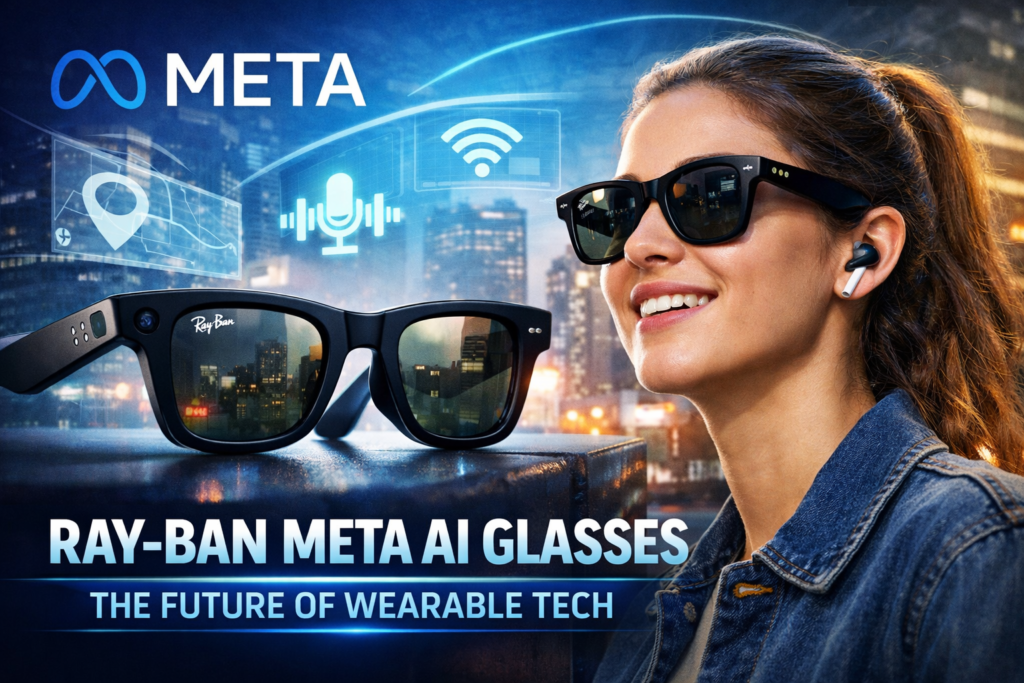
Ray-Ban Meta AI smart glasses are pushing wearable technology closer to everyday use rather than experimental gadgets.
In 2026, these glasses are no longer seen as a novelty. They are increasingly being discussed as a practical blend of fashion, AI, and hands-free computing.
Developed through a collaboration between Meta and Ray-Ban, the glasses aim to make AI interaction feel natural instead of awkward or intrusive.
Key Takeaway: Meta is positioning AI glasses as normal lifestyle tech, not futuristic hardware.
What Makes Ray-Ban Meta AI Glasses Different?
Ray-Ban Meta glasses stand out because they look like regular eyewear while offering built-in AI features.
Unlike bulky headsets, these glasses focus on subtle design and real-world usability.
AI-powered wearables are part of a larger trend where AI tools for small business and consumers are becoming more integrated into daily life
Users can interact with Meta AI using voice commands, capture photos and videos, listen to audio through built-in speakers, and get contextual information without pulling out a phone.
Key Takeaway: The biggest innovation is not the tech, but how invisible the tech feels.
How Meta AI Works Inside the Glasses
Meta AI inside the glasses acts as a hands-free assistant that responds to voice prompts in real time.
Users can ask questions, get quick information, or perform simple actions while staying engaged with their surroundings.
This approach reflects a shift toward ambient computing, where technology supports users quietly instead of demanding attention.
Key Takeaway: Meta AI turns glasses into an always-available assistant, not a distraction.
Why These Smart Glasses Matter in 2026
Ray-Ban Meta AI glasses matter because they signal a shift from screen-based interaction to voice-first computing.
As people experience notification fatigue, wearables that reduce screen dependency are gaining attention.
For Meta, this is also a strategic move to establish leadership in consumer AI hardware beyond smartphones.
Key Takeaway: Smart glasses represent Meta’s long-term bet on post-smartphone computing.
Privacy and Public Concerns
Privacy remains one of the biggest concerns around AI smart glasses.
Built-in cameras and microphones raise questions about recording, consent, and data usage in public spaces.
Meta has stated that visible indicators and clear user controls are designed to address these concerns, but public trust is still evolving.
Key Takeaway: Adoption will depend as much on trust as on technology.
What This Means for the Future of Wearables
Ray-Ban Meta AI glasses suggest that future wearables will prioritize comfort, design, and seamless AI integration.
Instead of replacing phones immediately, such devices are likely to work alongside them.
Industry analysts see this as an early step toward more immersive and intelligent everyday wearables.
Final Key Takeaway: Ray-Ban Meta AI glasses show how AI is quietly moving into daily life through familiar objects.